The Forge — Armory Forge Systems — Signet Article #035
It's 7:58 AM. Your phone buzzes. The text is three words long: "Can't make it today."
And just like that, your morning is a logistics problem. Who covers the shift? Who calls the customer whose appointment just lost its slot? Is anyone going to remember to move that meeting? By 8:15 you're still standing in the hallway with a phone in each hand, and the day hasn't even started.
Nobody plans for the sick day. That's the whole problem — sick days don't arrive on schedule.
Here's what most small businesses actually have for HR: a group text, a clipboard by the back door, a vague hope that someone's cousin can cover the shift, and payroll that quietly guesses at the truth. Not because the owner doesn't care — because a business with eight employees can't afford a full HR department to handle one text message.
That's not a people problem. That's a coverage problem wearing a phone's clothes.
The fix isn't "buy a scheduling app." The fix is a worker whose entire job is keeping the schedule honest — and this is the sixth in our series about enterprise workers: AI employees built to do one job at an enterprise level, without the enterprise headcount.
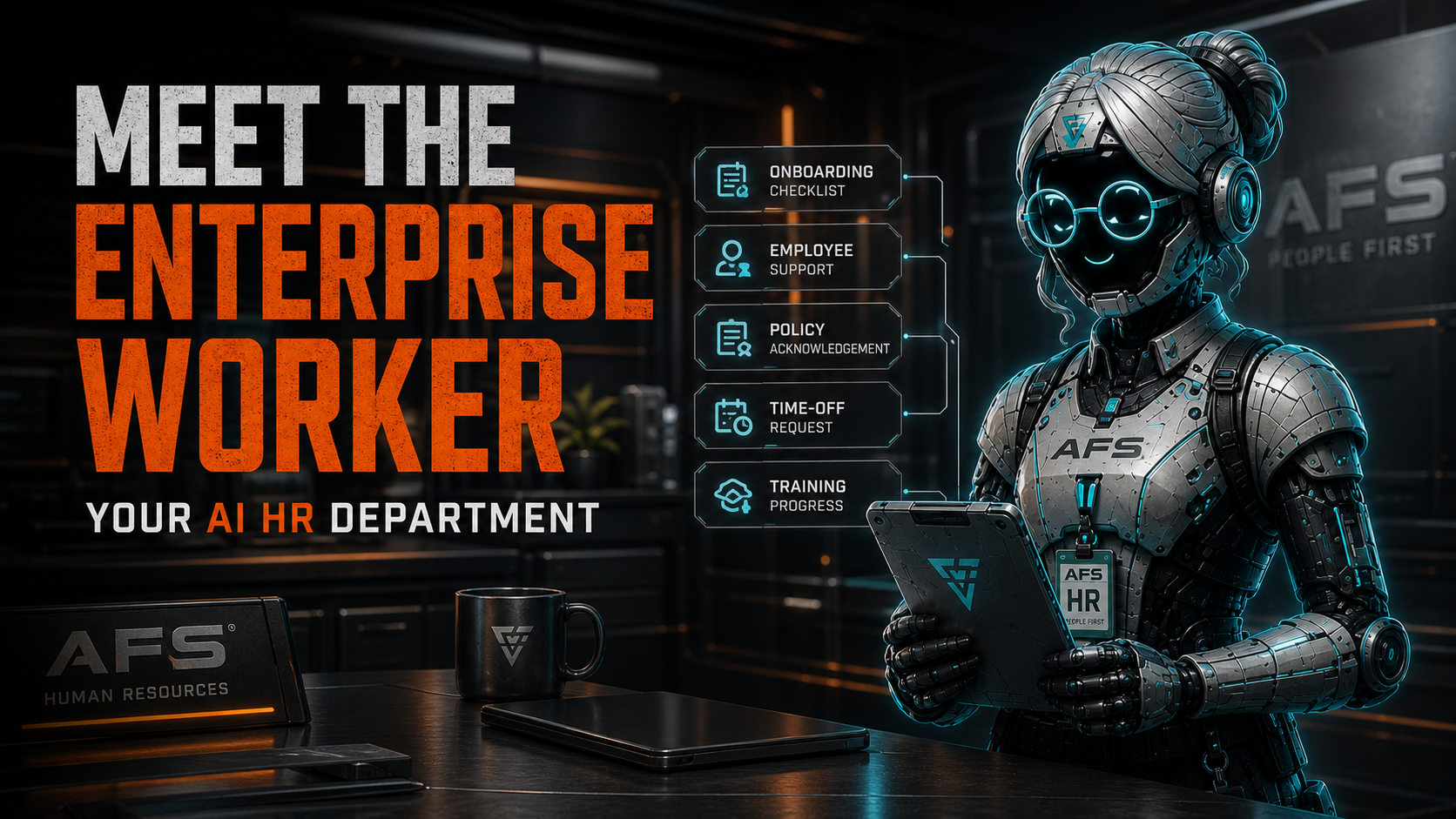
Meet the AI HR department.
One job, done better than any generalist
An enterprise worker isn't a chatbot that answers anything. It's a specialist. In a big company, HR isn't a side duty — it's a department, because one unplanned absence can ripple through a dozen customers, three vendors, and tonight's close.
Maggie is that department, compressed into a single worker.
Maggie doesn't "help with scheduling." Maggie runs attendance — continuously, around the clock, every day, including the days you'd rather not be awake for. The 2 AM shift-change text. The 6 AM food-poisoning confession. The holiday-weekend scramble. Someone is always available to take the report, log it, and start the coverage machine — without waking you up to do it.
The moment that matters: 7:58 AM
The classic small-business absence loop looks like this: employee texts in sick, owner starts calling around, coverage gets improvised, payroll gets reconstructed from memory three weeks later. That's not scheduling — that's firefighting with extra steps.
Maggie runs the loop the right way. The moment an employee reports out, three things happen at once: the absence is logged, the schedule updates, and the coverage gaps get flagged — not discovered at 9 AM when a customer walks into an empty lobby, but the second the schedule breaks. If the shift needs coverage, that's visible immediately, which means there's still time to do something about it.
And the record is automatic. No more payroll guessing whether Tuesday's absence was a sick day or a half-day. No more "I texted you, remember?" conversations. The history is there, consistent, in one place.
The part people don't expect: it's easier to tell the bot
Here's the thing about calling in sick — nobody enjoys it. Employees dread the phone call: the guilt, the interrogation, the unspoken "are you really sick?" The manager dreads it too: the obligation to care without being nosy, to cover the shift without sounding annoyed.
A text to Maggie is none of that. No judgment, no sigh, no third degree. Report it, done — and the human manager gets a clean, complete update instead of a rambling voicemail. For the employee, it's the most dignified way to call in sick that exists. For the manager, it's the same information with zero emotional overhead.
And because the records are consistent, patterns surface gently over time — not as accusations, but as data. If a shift is chronically under-covered on Saturdays, that's a scheduling problem worth fixing, not a surprise every single week.
The steady hand on the schedule
Maggie isn't about policing your people — it's about making sure the business keeps running when life happens, because life always happens. Time-off requests get tracked fairly, first come, first served, no favorites. Coverage gaps get flagged while they're still fixable. Payroll gets records it can actually trust, so nobody gets shorted and nobody gets overpaid.
Your people stay human. Your customers stay served. And you stop spending the first hour of every rough morning on the phone.
Why this is an Enterprise Worker, not an app
An app doesn't answer at 2 AM. An app doesn't remember last month's schedule. An app sits in a folder and waits for you to remember it exists.
Maggie is a worker. It has a job, it does the job, and it reports. Like every worker in the Armory Forge Systems fleet, it's built to be one department in a workforce that scales as your business grows — start with one worker doing one job, and add more as you need them.
The businesses that win aren't the ones that never have a sick day. They're the ones that have a plan for the 7:58 AM text — before the text arrives.
You imagine. We build. To the victor, the spoils.