The Forge — Armory Forge Systems — Signet Article #027
Every business owner asks the same question before buying anything: what's this going to cost me, and when do I get it back?
With AI, the answer is usually faster than people expect — but it's not automatic. An AI employee pays for itself when you put it to work on the right jobs and then actually measure what it did. Not because the software is magic.
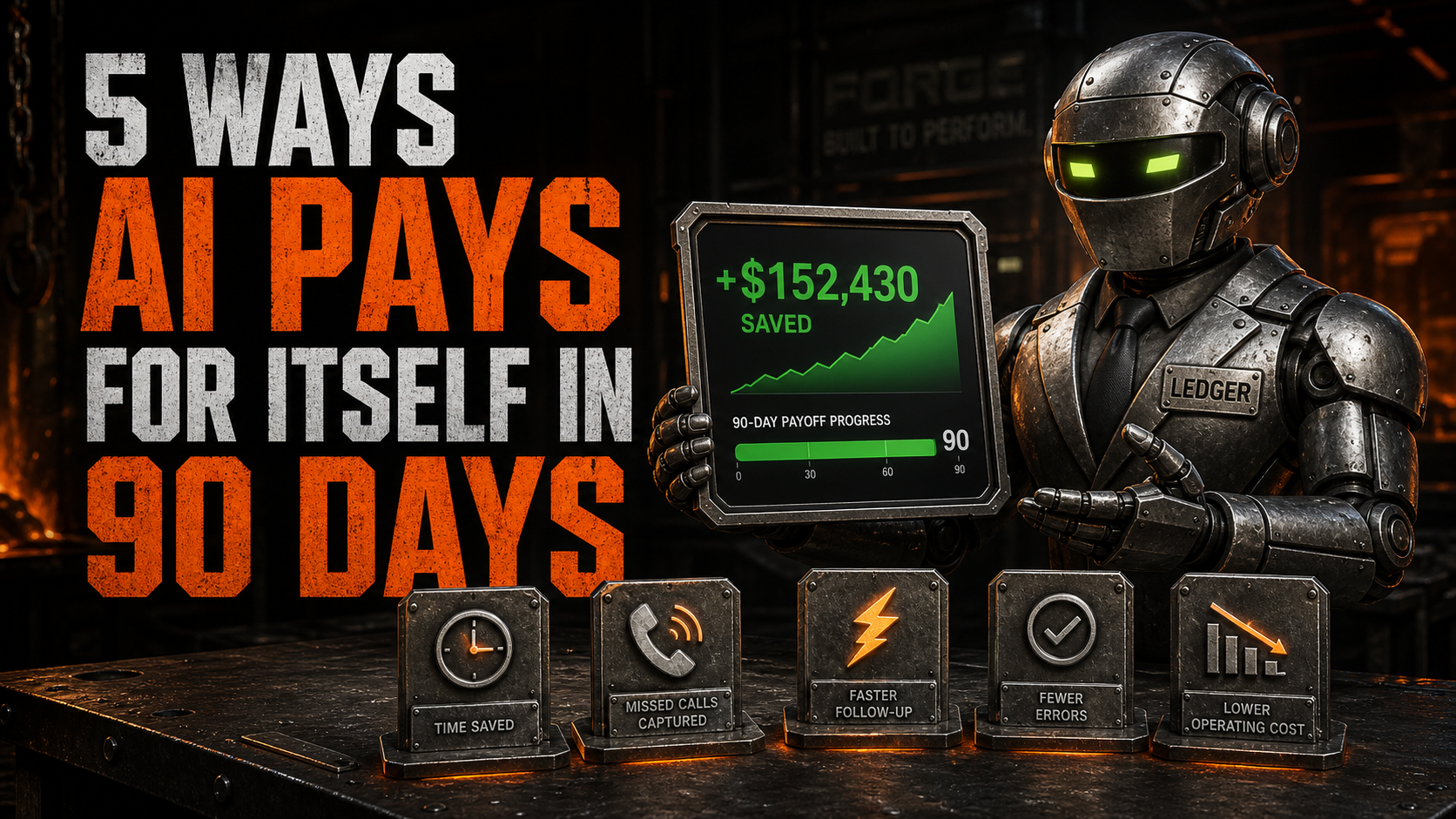
Here are the five ways it pays for itself, in the order we see them show up. Run the math on your own business — most owners find the first two alone cover the cost.
1. It stops the calls you're already missing
Every missed call is a missed sale — and most small businesses miss more than they think. A phone that rings at 6:47 PM doesn't get to wait until tomorrow morning; the customer calls the next shop on their list.
Count it honestly: how many calls a week go to voicemail? How many of those become jobs? Even one good job a month usually covers an AI receptionist's entire cost. The phone is the cheapest marketing you already have — an AI employee just makes sure it never rings into silence.
2. It follows up on every single lead
Here's the uncomfortable truth: most small businesses don't lose customers because their work is bad. They lose them because nobody followed up.
A quote goes out. A lead fills out the form. A customer hasn't rebooked in six months. Each one is a warm hand raised — and each one goes cold if nothing happens in the next few days. An AI employee never forgets a follow-up. It's the difference between a lead that slips away and a lead that becomes a job. When you're paying for every lead you get, the follow-up is where the money is made or lost.
3. It works the hours you don't want to
Evenings. Weekends. Lunch. Holidays. Your customers don't only need you during business hours — that's just when you happen to be available.
An AI employee doesn't punch out. The 9 PM inquiry gets answered in minutes, the appointment gets booked overnight, and Monday morning you wake up to a calendar that filled itself. Every after-hours job is a job a competitor didn't get a chance at.
4. It gives you back the hours you can't buy
The admin work — data entry, invoice matching, report drafting, copy-paste between systems, the endless small stuff that eats the edges of every day — that's not your real job. That's the tax you pay for owning a business.
Add up those hours in a week. Now multiply by what your time is worth when you're doing the work you actually started the business to do. Most owners are shocked at the number. An AI employee that takes over the paperwork pays for itself in hours returned — and hours returned is revenue you don't have to chase.
5. It compounds — and you can measure it
This is the one that surprises people. AI doesn't just do one job; it gets better at it, and it frees you to do more of what only you can do.
Day 90 is the checkup. Pull the numbers: calls answered that used to go to voicemail. Leads followed up that used to go cold. After-hours appointments booked. Hours handed back. Add it up against what you paid — and then decide what hire number two should be.
That's the real return. Not one worker replacing one task. A system where every job you hand to AI frees a piece of you — and the whole thing keeps compounding month after month.
The Closing Thought
Nobody opens a business to do data entry at midnight. You opened it to build something — and the work that stands between you and that is exactly the work AI is best at: repetitive, rule-based, high-volume, and costly when it slips.
Ninety days is the honest test. Not a sales pitch, not a promise — a number you can actually check.
Steel is forged in the fire, then measured on the scale. Run the numbers at day 90. If the work is getting done and the hours are coming back, you'll know exactly what to forge next.
Want to know which AI hire pays for itself fastest in your business? The Armorer can run the math with you — no pressure, just answers.